Restaurant Menu Engineering: How to Turn Your Menu Into a Profit Tool
Menu engineering is the discipline of looking at every dish through two lenses at once: how often it sells, and how much it earns. Most menus have dishes that are loved but barely profitable, and dishes that are profitable but rarely ordered. Engineering the menu means deciding what to do about each.
The matrix
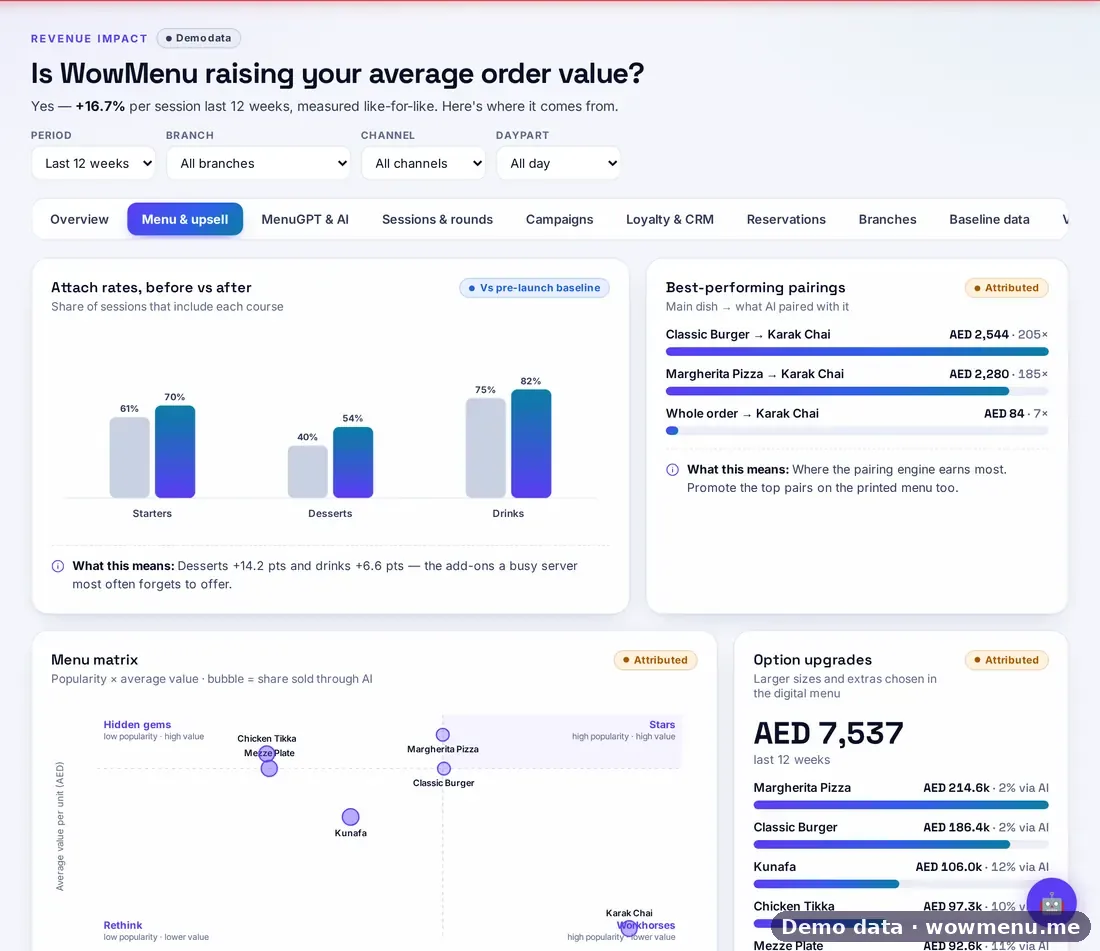
Plot each dish by popularity (how often it is ordered) and profitability (its margin or value per order). You get four groups:
- Stars: popular and profitable. Protect them, feature them, never let them run out.
- Workhorses: popular, less profitable. Review the recipe or portion, add a profitable add-on, or adjust the price carefully.
- Puzzles: profitable, rarely ordered. Describe them better, move them up, recommend them.
- Dogs: neither. Rework them or remove them.
Act on each group
- For stars, give them the best position and the best description, and make them a pairing anchor.
- For workhorses, attach a high-margin side or drink so the order as a whole earns more.
- For puzzles, write a better sentence, add a photo, and let recommendations surface them.
- For dogs, replace them, and free up space and prep time.
What a digital menu changes
On paper, menu engineering happens once a season. A digital menu turns it into a weekly habit:
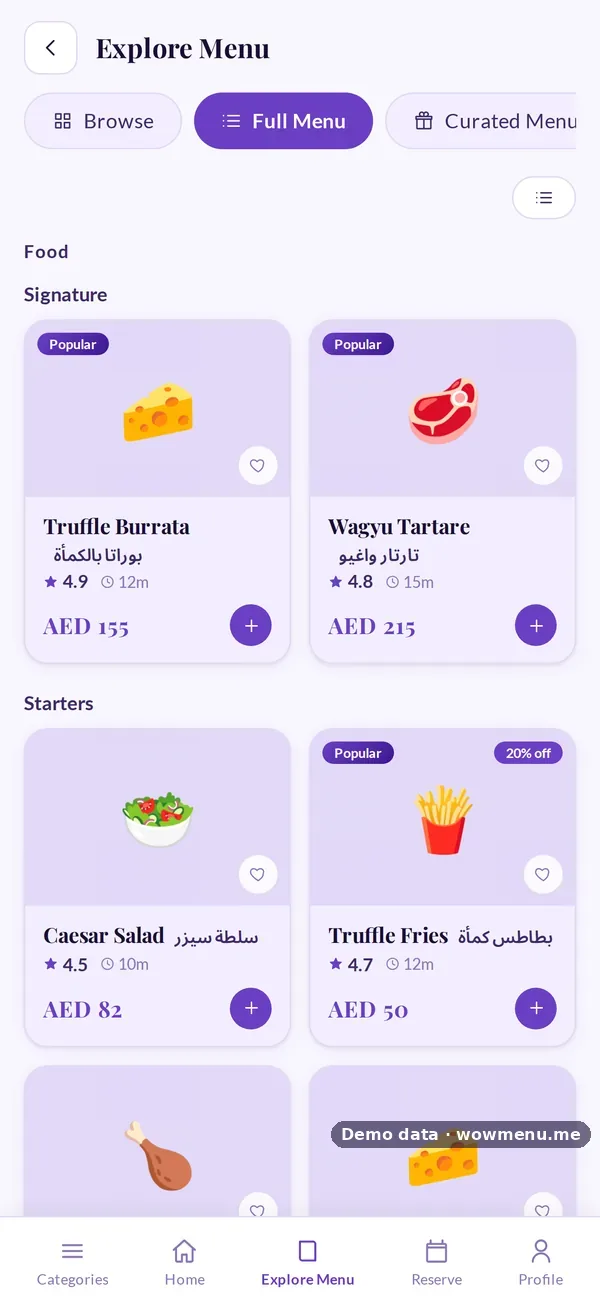
- Position changes instantly. Move a puzzle up the category and see what happens next week.
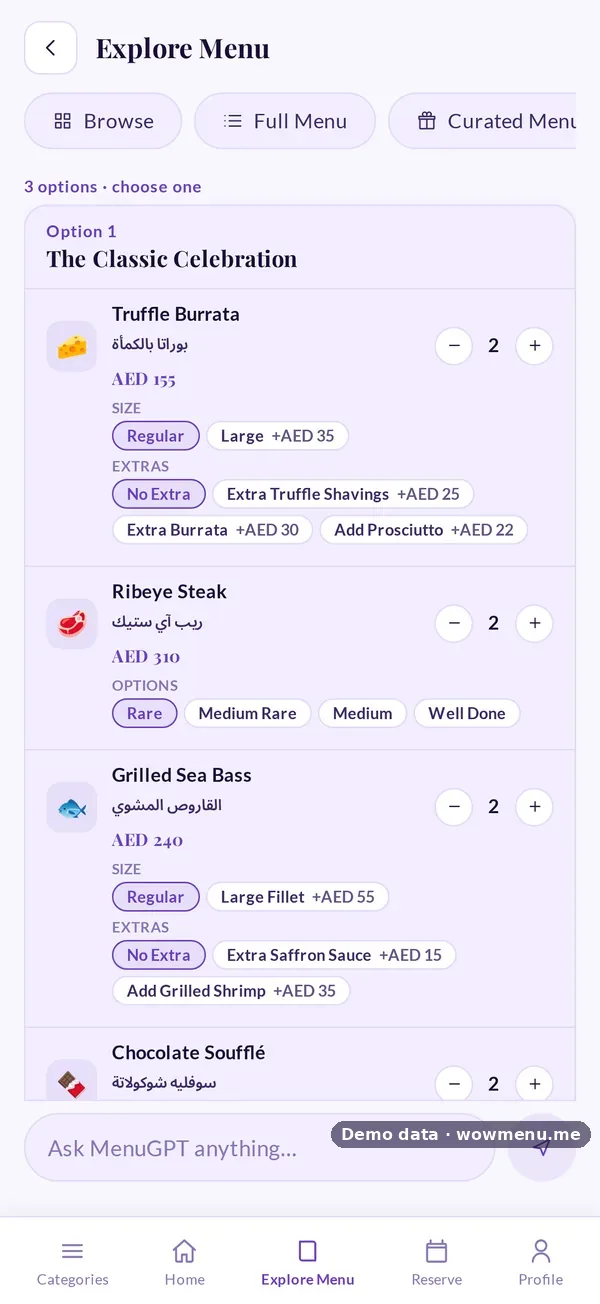
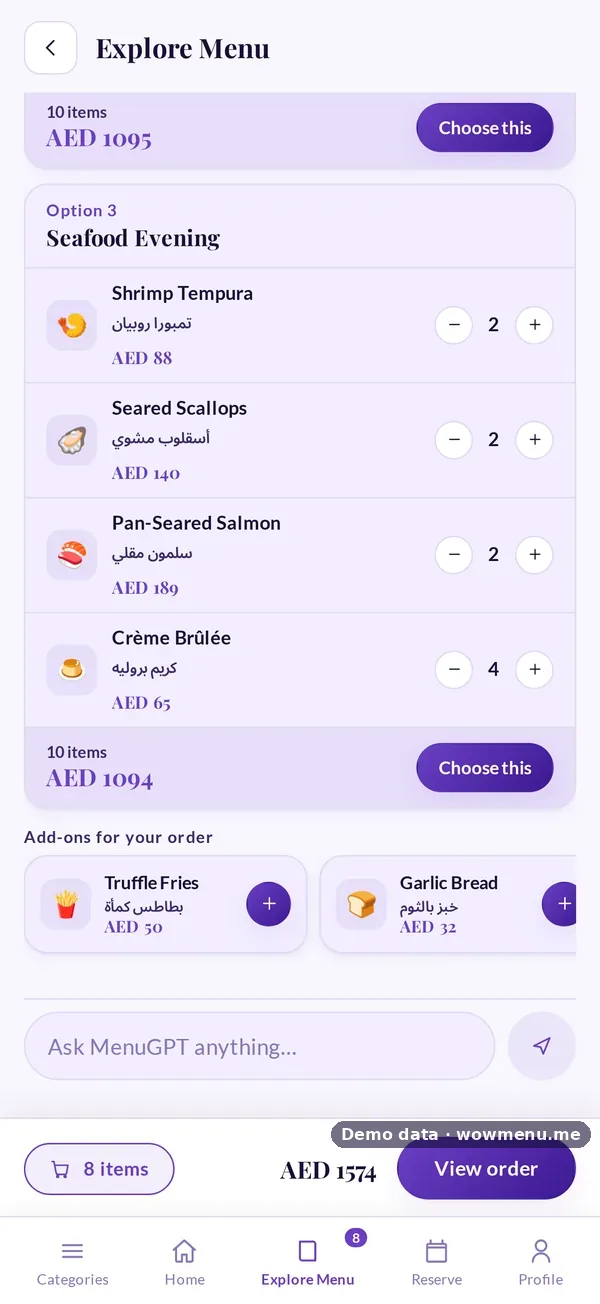
- Recommendations do the promoting. MenuGPT and pairings can suggest a profitable dish at exactly the right moment.
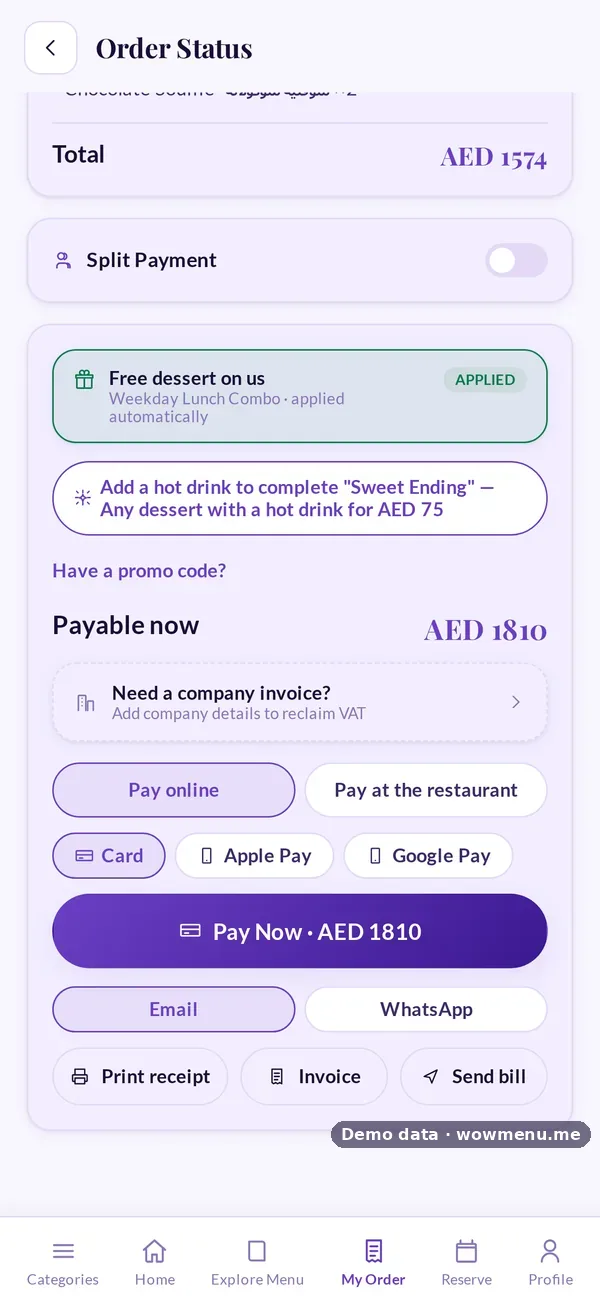
- Add-ons fix workhorses. A pairing on a popular dish lifts the order without touching its price.
- Data is live. You do not need to count tickets by hand.
The numbers to watch
Revenue Impact's Menu and upsell view shows a menu matrix of popularity against value, attach rates before and after, the best-performing pairings and which option upgrades earn the most.
A simple routine
- Once a month, sort dishes into the four groups.
- Pick one action per group.
- Change one thing at a time, and give it two to four weeks.
- Compare like with like, by day and daypart.
For the bigger picture, see how to increase average order value, and for the tools, analytics and Revenue Impact.