AI Food Recommendations: How Restaurants Use Them Without Pushing Guests
A good server's recommendation rarely feels like selling. It feels like advice from someone who knows the menu, has noticed who is at the table and wants the evening to go well. AI food recommendations can work the same way, or they can feel like an advert. The difference is in what the AI knows, when it speaks and what it refuses to do.
What a good recommendation looks like
The weakest recommendation is a single dish: "Try the Truffle Burrata." It is easy to ignore because it does not solve the guest's real problem, which is deciding what the whole table should eat.
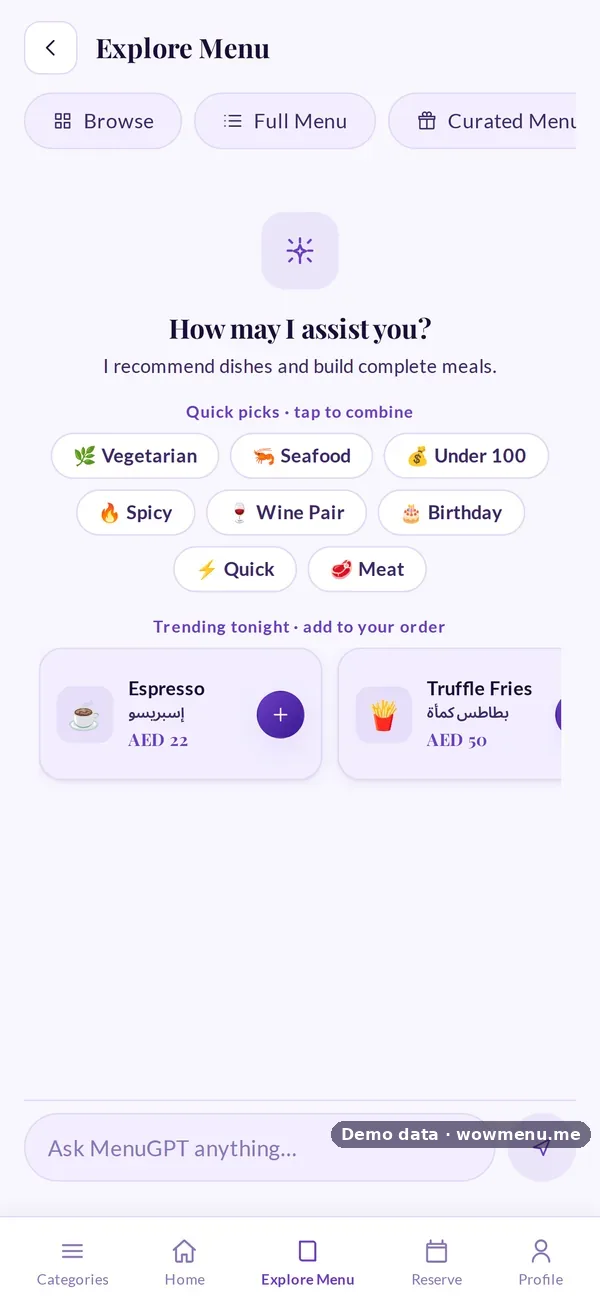
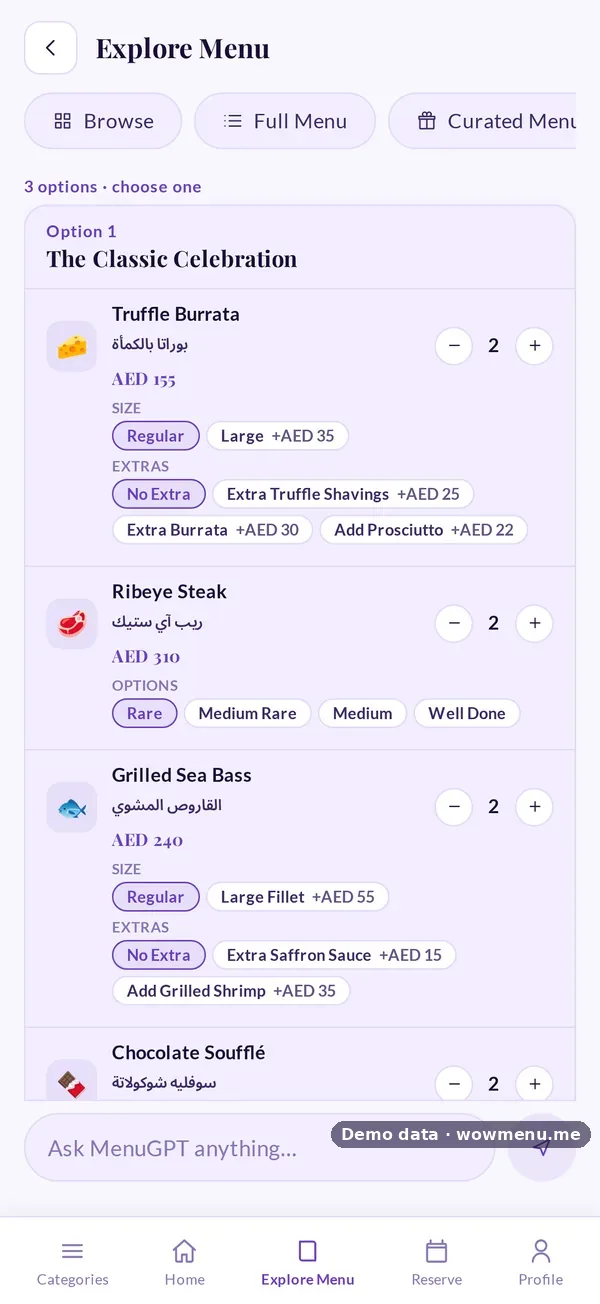
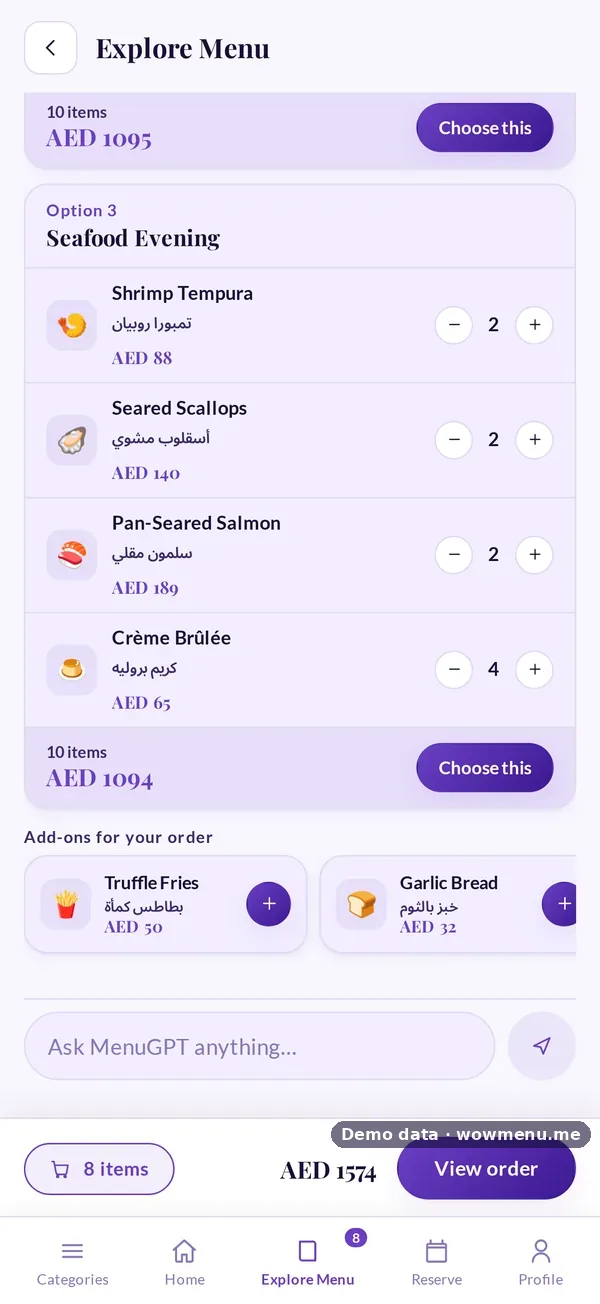
A strong recommendation is a complete, orderable answer. Ask MenuGPT for "a birthday dinner for four" and it builds two or three full options, sized to the party, with quantities, sizes and extras the guest can adjust before adding everything in one tap.
What the AI should know
Recommendations are only as good as the context behind them. On WowMenu, MenuGPT answers from:
- Your active menu, including sizes, extras, dietary tags and allergens
- Your live offers, so a suggestion can point to a combo or a deal that is actually running
- Availability, so a sold-out dish is swapped for the closest alternative from the same category
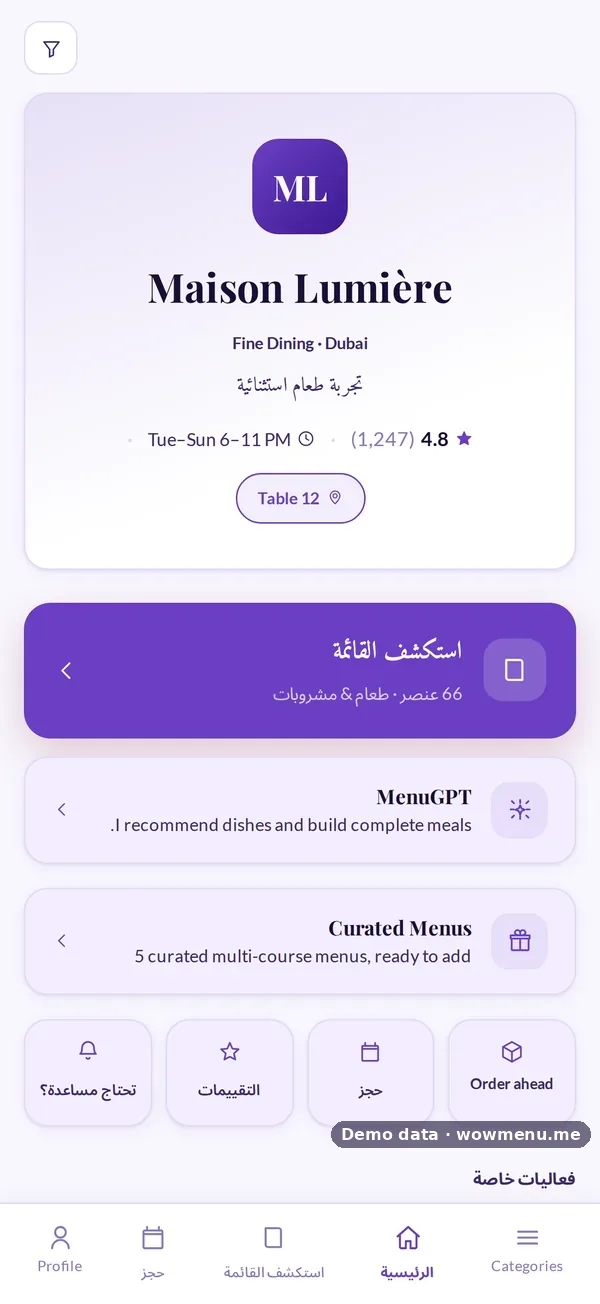
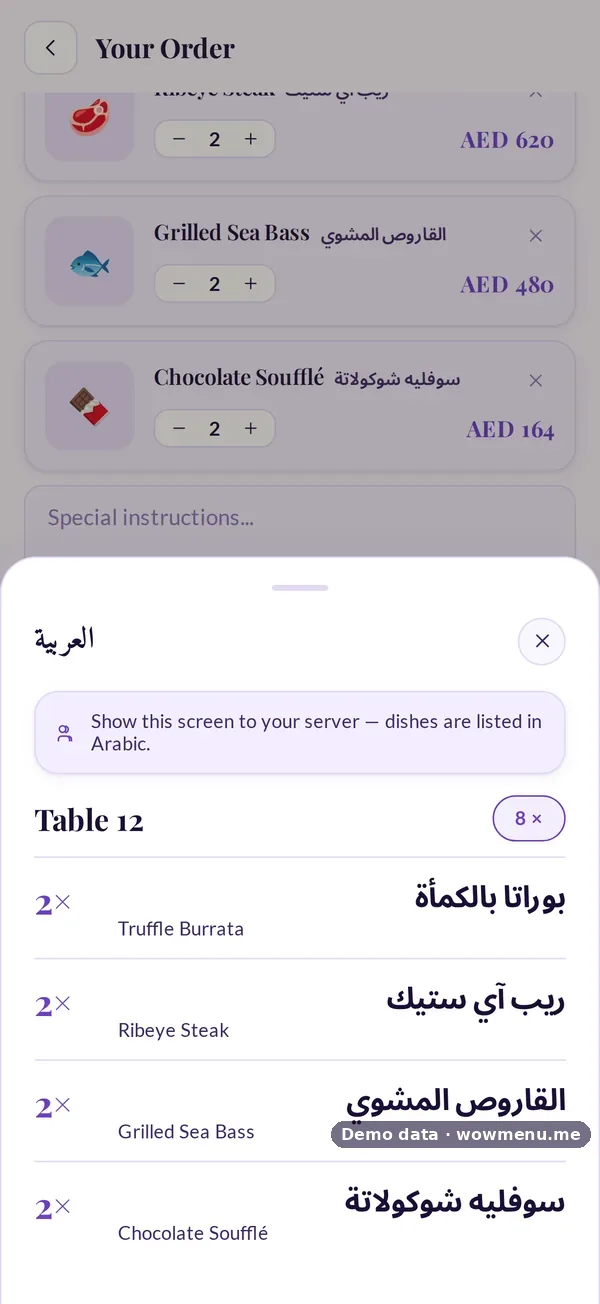
- The guest's language, so the answer arrives in the language they chose
- Their loyalty status, for signed-in guests
What the AI should never do
Trust is lost faster than it is earned. A recommendation engine you can rely on never suggests a dish you don't sell, never invents a price, offer or points balance, and never pushes a sold-out dish. It should also know when to be quiet: suggestions belong while the guest is choosing, not while they are paying.
Where recommendations belong
Recommendations work best at three moments:
- When the guest is undecided. A quick pick (Vegetarian, Seafood, Birthday, Wine Pair) or a question in their own words.
- Right after a choice. Add-ons that genuinely go with what they picked, from the pairings you set.
- When the order is one step from a deal. A single slide-up offer, never repeated. How upselling guardrails work.
Personal, not creepy
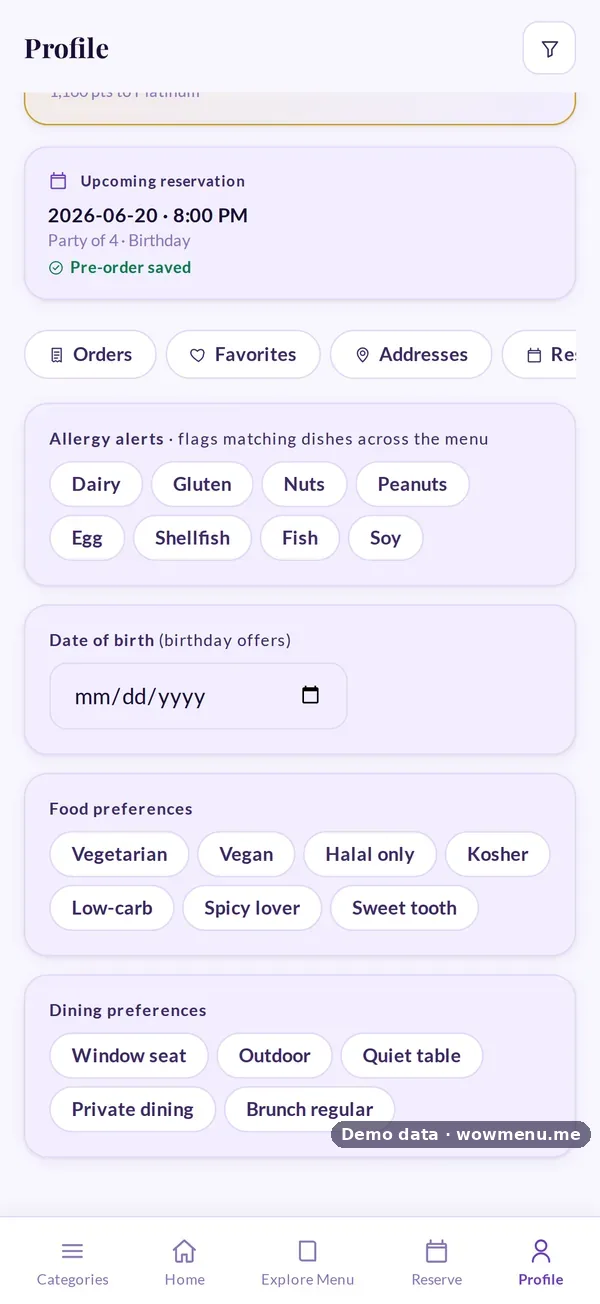
For signed-in regulars, recommendations can reflect what the guest has told you: allergy alerts that flag matching dishes, food preferences such as Vegan or Halal only, and past orders they can repeat in one tap. Use what guests chose to share; do not guess at what they did not.
How to measure whether guests accept them
Ask four questions of any recommendation system:
- How many guests opened it?
- How many recommendations were shown, added or dismissed?
- How many of those orders were paid?
- Which kinds of request ("vegetarian", "for the table", "wine") convert best?
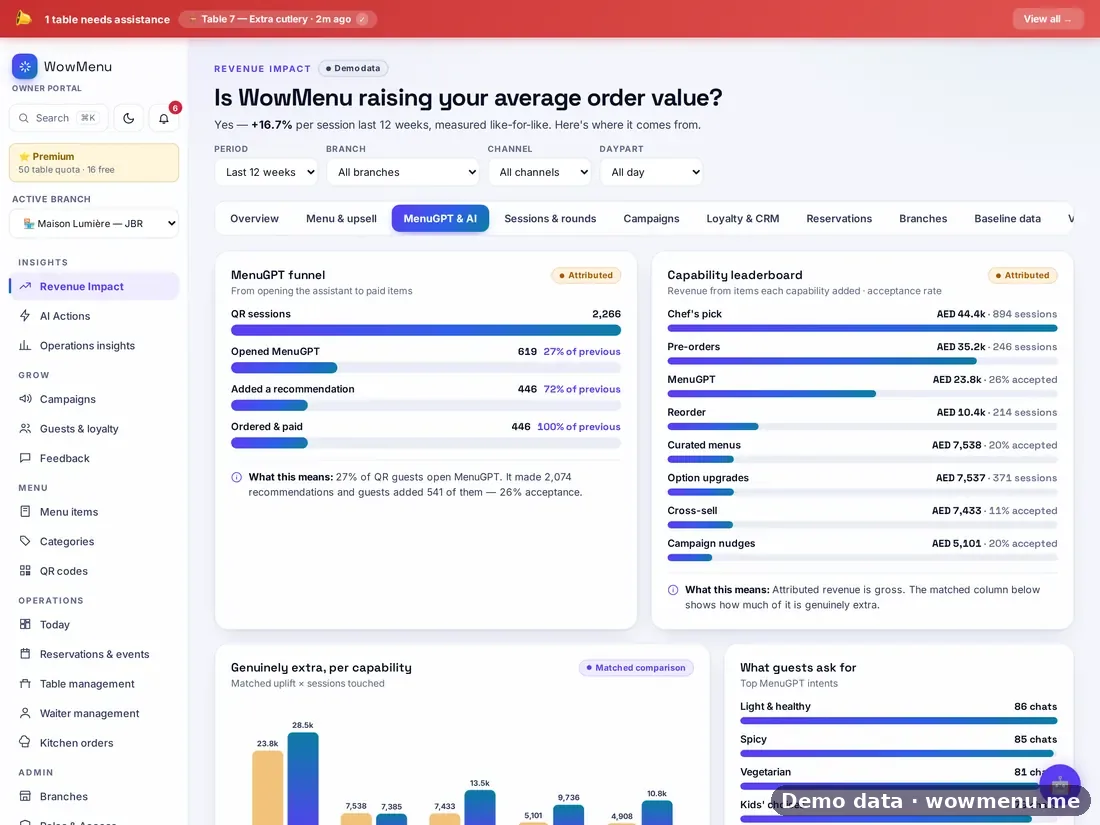
WowMenu tracks every suggestion as shown, added or dismissed, and Revenue Impact shows the MenuGPT funnel from opening the chat to a paid order, plus what guests ask for most.
Before you switch it on
The quality of recommendations depends on your menu data. Spend an hour on it first:
- Write a short, honest description for every dish (AI generate can draft one for you to edit)
- Tag dietary needs and allergens accurately
- Set the pairings you actually want suggested
- Remove or 86 dishes you cannot serve tonight
Fine dining restaurants worry that AI will cheapen the experience. It does not have to; read how it can work in fine dining.