Bronze to VIP: Why Tiered Loyalty Is Replacing the Punch Card
The punch card is simple: buy nine, get the tenth free. It is also blunt. It rewards a guest who buys nine small coffees exactly as it rewards a guest who hosts nine family dinners, it lives in a wallet until it is lost, and it tells you nothing about who your best guests are. Tiered loyalty does better on every count.
How tiered loyalty works
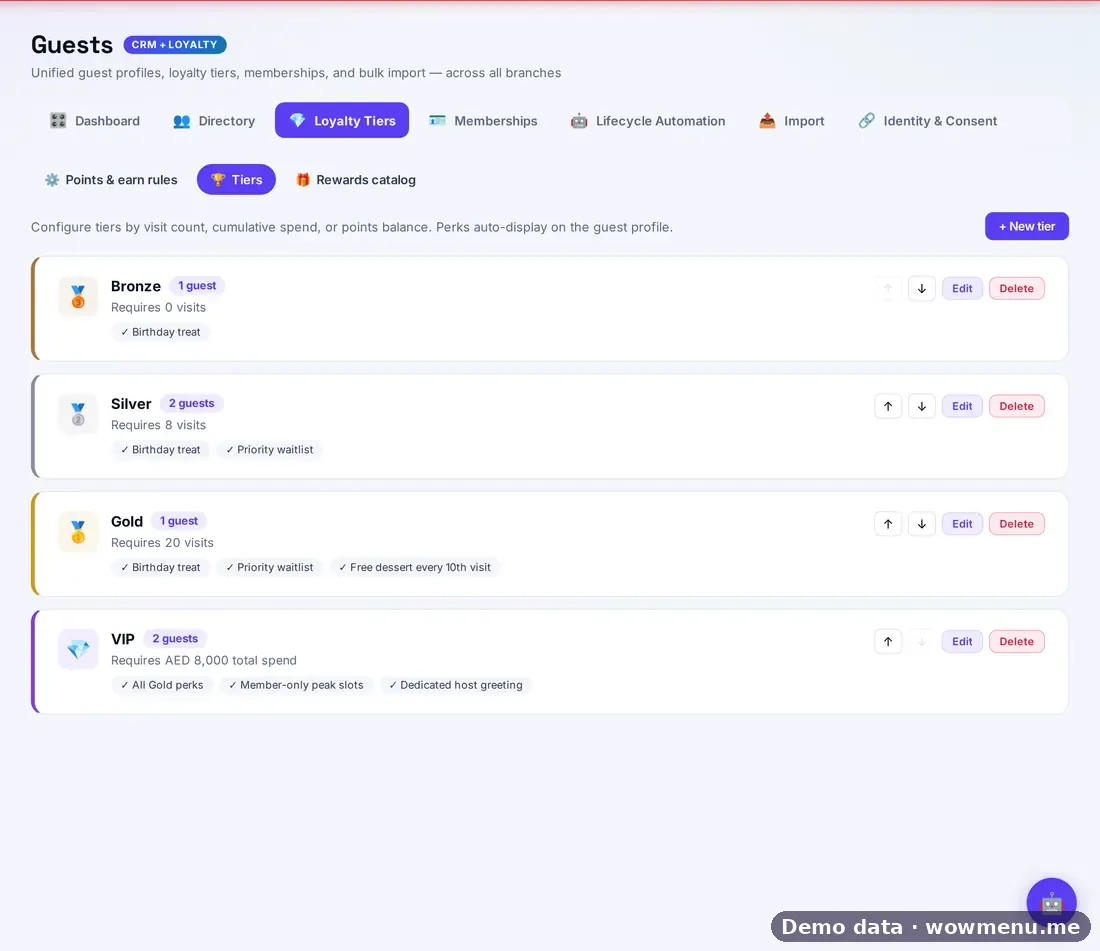
Guests earn points for what they do: spending, visiting, honouring a reservation, leaving a review. Points have a clear value that you set, for example 100 points worth AED 10. As guests visit more or spend more, they move up tiers, such as Bronze, Silver, Gold and VIP, each with its own perks.
Perks guests notice
The best perks are things a guest feels on the night, not just a discount:
- A birthday treat
- Priority on the waitlist
- A free dessert every tenth visit
- Member-only booking slots at peak times
- A dedicated greeting from the host
Beyond points: streaks and challenges
Streaks reward guests for coming back each month, and challenges give a short-term goal, such as visiting three times this month for bonus points. Both reward the behaviour you want: regular return visits.
What the guest sees
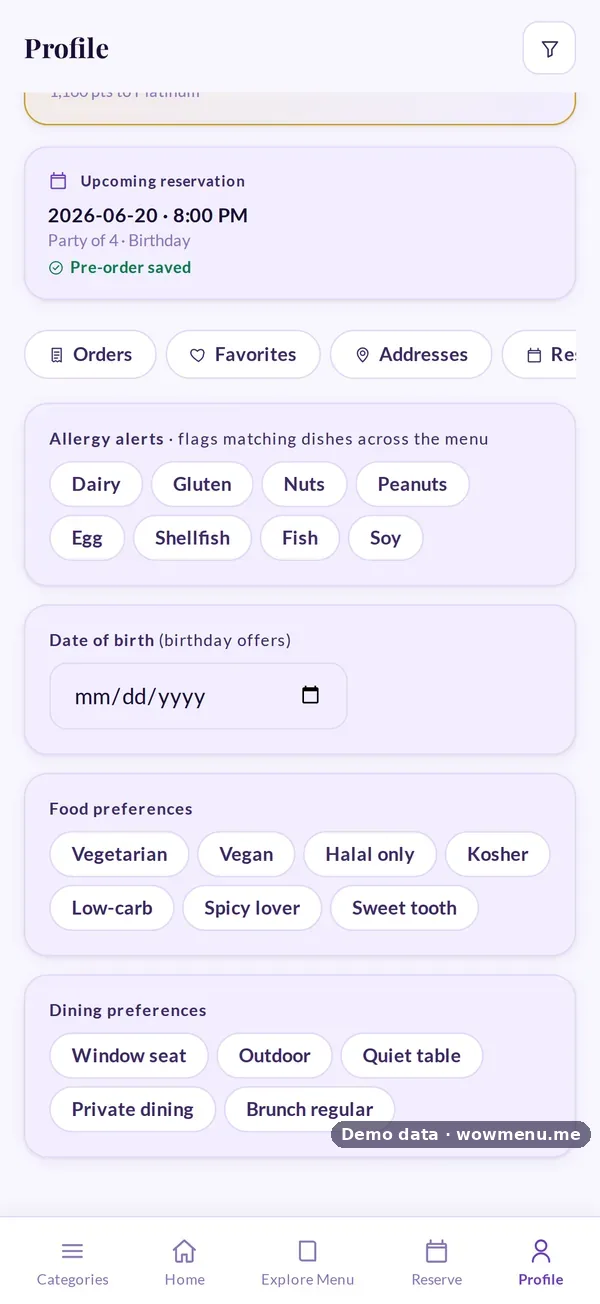
Guests see their tier, its perks and how far they are from the next one, every point in their history, and what they can redeem. At payment, a signed-in guest can redeem a reward or pay part of the bill with points.


Keeping the cost in check
Points are a promise, and unredeemed points are a liability. Keep it healthy:
- Set what a point is worth, and keep rewards within your margin
- Prefer rewards that cost little and mean a lot: a dessert, priority seating, valet parking
- Watch for rewards nobody reaches, and add a cheaper entry reward
- Review the catalogue every quarter
Where memberships fit
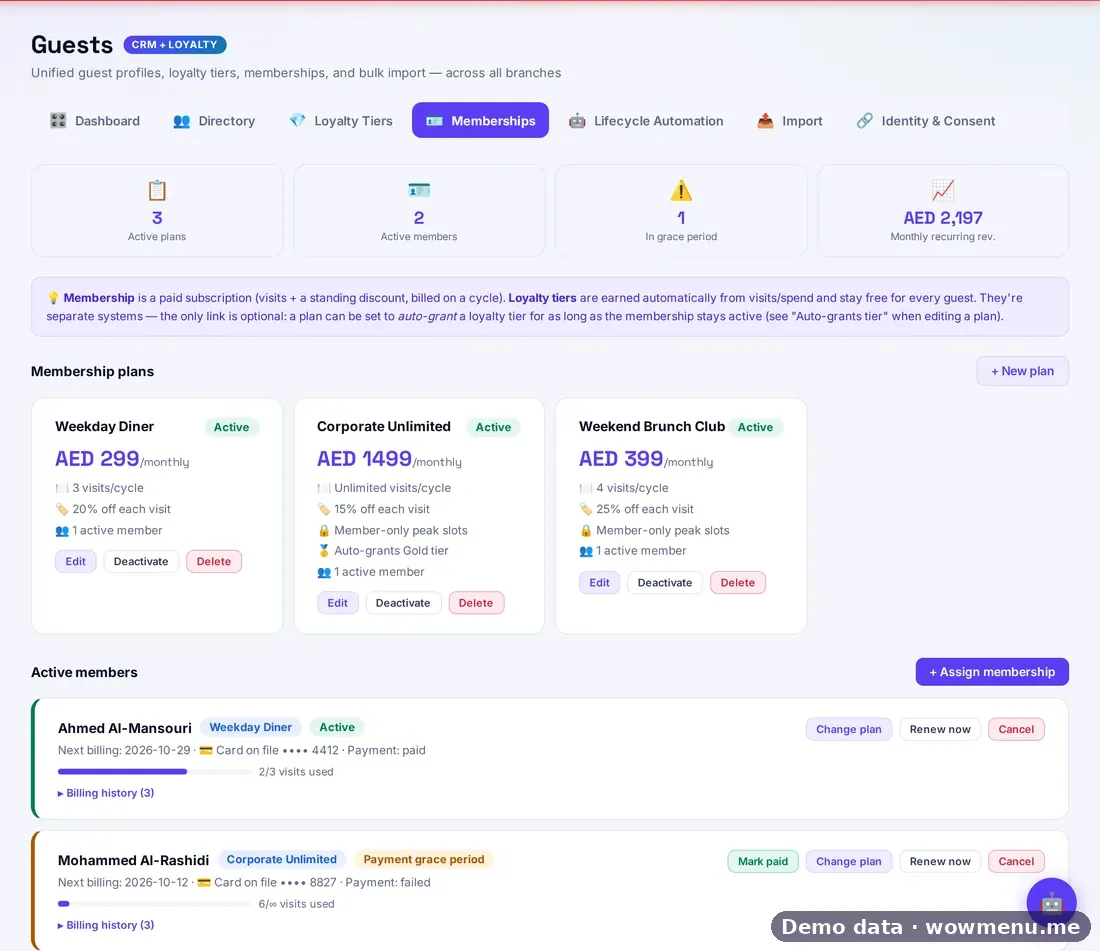
Tiers are earned. A membership is a paid subscription alongside them, with its own allowances and perks. Memberships vs loyalty tiers.
See the loyalty programme, or for the Gulf, loyalty software in the UAE.